Sonar
Sonar is a technique that uses sound to navigate, communicate with or detect other vessels, and to observe the distance and velocity of underwater objects. The acoustic frequencies used vary from extremely low (infrasonic) to very high (ultrasonic). The word “sonar” also describes the equipment used to gather and analyze acoustic information. Sonar is used in depth sounding, fish finding, seafloor mapping, Doppler navigation, and acoustic location systems for divers. The term for the scientific study of underwater sound is hydroacoustics.
Three types of technology are categorized as "sonar":
- Passive sonar uses receiving sensors to listen for and analyze the sound made by vessels
- Active sonar uses an acoustic projector to emit pulses of sounds and a receiver which detects the echoes to find the range, bearing and relative motion
- Acoustic communication systems use a projector and receiver at both ends of the acoustic path
Sonar was first proposed as a means of detecting icebergs, but government interest in and funding of sonar systems did not take off until World War I highlighted the threat posed by submarine warfare. Modern technological innovations have included rapid-scanning and side-scan sonar, the echo sounder (or depth detector,) and within-pulse electronic sector scanning sonar (or WPESS). Military uses of sonar include systems used in acoustic homing torpedoes, in acoustic mines and mine detection.

Moose Boats Completes Boat for Sacramento Sheriff’s Office
Moose Boats is excited to have completed the M2-38 patrol vessel for the Sacramento…

Anschuetz Adds Generic Overlay for SYNAPSIS ECDIS NX
Anschuetz has added the Generic Overlay feature, which extends SYNAPSIS (W)ECDIS…

Autonomous Vehicles Solve (and Create) Problems for Ports
Autonomous vehicles are increasingly sophisticated defensive tools for ports wanting…

Phoenix International Expands into Rocket Booster Recovery Sector
Phoenix International has announced their expansion into the rocket booster recovery sector…

Saildrone Introduces High-Endurance Anti-Submarine and Strike USV
Saildrone has announced its newest platform, Spectre. At 52 meters (170 feet) long…

US Sets Out to Clear Mines from Strait of Hormuz
As the United States embarks on clearing mines from the Strait of Hormuz, it could…

Breakthrough Technology Unveiled at Oceanology International
Major industry announcements and new product launches continued to drive significant…

NOAA, Northrop Grumman to Release Sonar Images of the USS Monitor Shipwreck Site
NOAA and Northrop Grumman will release the first-ever high definition sonar images…

Phoenix Assists US Navy with Aircraft Recovery in the South China Sea
Phoenix's International (Phoenix) recently assisted the Naval Sea System Command…

FarSounder Argos 3D Sonar Integrated with Anschütz SYNAPSIS (W)ECDIS NX
FarSounder, an innovator in 3D forward looking navigation sonar technology, has announced…

FarSounder Announces SEA.AI Integration in Web Application
FarSounder announced an integration with SEA.AI, a leader in AI-powered vision systems…

Thales, HII Partner to Develop Autonomous Undersea Mine Countermeasure Capabilities
HII and Thales announced the successful integration and field exercise of the Thales…
Narco-submarines, the clandestine vessels used by drug traffickers, represent one of the most sophisticated and elusive methods of smuggling drugs across international waters. These semi-submersible and fully submersible crafts are a testament to the ingenuity and resourcefulness of criminal organizations in circumventing law enforcement efforts. This article delves into the history, construction, operation, and interdiction of narco-submarines, highlighting their impact on global drug trafficking.
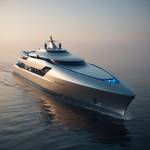
The maritime industry is on the brink of a revolutionary transformation with the advent of autonomous ships. These vessels, capable of operating without human intervention, represent a significant leap forward in technology, promising to reshape the future of global shipping. Autonomous ships, also known as unmanned vessels, are designed to navigate and perform various operational tasks using advanced sensors, artificial intelligence (AI), and communication systems. This innovation is set to enhance efficiency, safety, and sustainability in the maritime sector.
Navigation, derived from the Latin words "navis" (meaning "ship") and "agere" (meaning "to drive") is the process of accurately determining the position and controlling the movement of a craft or vehicle along a desired course. This is accomplished…
Contracts between vessel owners and charterers concerning the water transportation of goods are technically known in admiralty law as "contracts of affreightment". The charterer agrees to pay a freight charge for cargo space. The voyage, amount of cargo space…

Container ships are vessels designed specifically to transport standardized containers. Container ships have revolutionized shipping, making it more cost-effective and efficient to transport goods across oceans.