Ship Repair
All ships need maintenance and repairs. Many repair and maintanance operations can be performed at sea or by the crew in port. Complicated or large-scale repairs might require the ship to be removed from commercial operation. Classification Society supervision is required for most large-scale repairs, particularly those carried out in a ship repair yard. For oceangoing ships, particularly tankers, the ship has to be prepared for repair at a Deballasting Station. The tank must be thoroughly cleaned and its slops (grey water and hydrocarbon residues) must be pumped ashore according to environmental regulations.

The Trouble with Pinning Down Maritime
Connecticut Maritime Association has decided to move its annual meeting and exposition…

Cobots Take on Grueling Work
In the February issue of Maritime Reporter magazine Nirav Patel, Nuclear Navy Segment…

Shipbuilders Council of America Announces New Board of Directors Leadership
The Shipbuilders Council of America (SCA), the national association representing the U.S.

Sabine Surveyors, Ltd. Announces Parent Company Transition, Leadership Appointments
Sabine Surveyors, Ltd. has announced organizational changes aimed at strengthening…

Tsuneishi Kure Completes Renewal of No.2 Floating Dock
Tsuneishi Kure has completed refurbishment work on the No.2 Floating Dock at its Wakaba Works…

Drydocks World, Cochin Shipyard Limited Enter Agreement to Develop Ship Repair Cluster in Kerala
Drydocks World, a DP World company, and Cochin Shipyard Limited (CSL) have signed…

Lagersmit, Subsea Global Solutions Strengthen Partnership in Southeast Asia
Lagersmit, a provider of advanced sealing solutions and a member of The Timken Company…

Colonna’s Shipyard Invests $70m for Fourth Drydock
Colonna’s Shipyard, Inc. (CSI) will invest $70m to acquire its fourth drydock, expected…

Everett Ship Repair Acquires Puget Sound’s Largest Dry-Dock
Everett Ship Repair, LLC (ESR), a provider of ship repair and conversion services…

ASRY Taps Solar Power for Shipyard
Arab Shipbuilding and Repair Yard Company (ASRY) unveiled an innovative solar energy…

Vard Secures Seismic Vessel Conversion Job
Norwegian shipbuilder Vard has signed a contract with Norway-based Sanco Shipping…

General Dynamics NASSCO Takes Delivery of New Floating Dry Dock
General Dynamics NASSCO has taken delivery of a new dry dock at its Long Beach location…

Cutting-Edge Electric Propulsion for Container ShipsHD Korea Shipbuilding & Offshore Engineering and HD Hyundai Heavy Industries received Approval in Principle (AIP) from ABS for a concept design of a 16,000 TEU container ship featuring an electric propulsion system.
Blockchain technology, initially developed as the backbone of cryptocurrencies like Bitcoin, is now making waves in the shipping industry. With its ability to provide secure, transparent, and tamper-proof records, blockchain is poised to revolutionize global supply chains, addressing some of the most persistent challenges in maritime logistics, including inefficiencies, fraud, and lack of transparency.
Maritime Security is a term which applies to a large variety of technology, devices, and operations both on deck and on shore. It can mean the simple measures used by boat owners and operators to protect individuals, vessels, and cargo from theft, sabotage, or piracy.
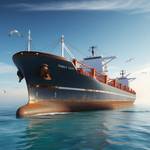
Tanker ships are an important component of the maritime sector, and they transport liquid cargoes around the world. These vessels are vital to the supply chain for energy, chemicals and other essential commodities. There are many types of tankers, each designed for specific cargoes such as oil, LNG, chemicals, or other liquids.
The maritime piracy menace is an old one, but it continues to be a significant threat to the global trade and security of the seas. Piracy is a major challenge today, despite concerted efforts by international organizations to combat this illegal activity. New developments and persistent threats are shaping the current landscape.